

Quick answer
Peak bear activity at Brooks Falls occurs during July and September, and the recommended arrival window is 07:00–19:00. July brings bears to the falls itself as sockeye leap upstream; September shifts the action downriver to spawning fish. Brooks Camp is accessible around the clock, with no entrance fee, but platform capacity is limited — early arrival within that window is the real constraint.
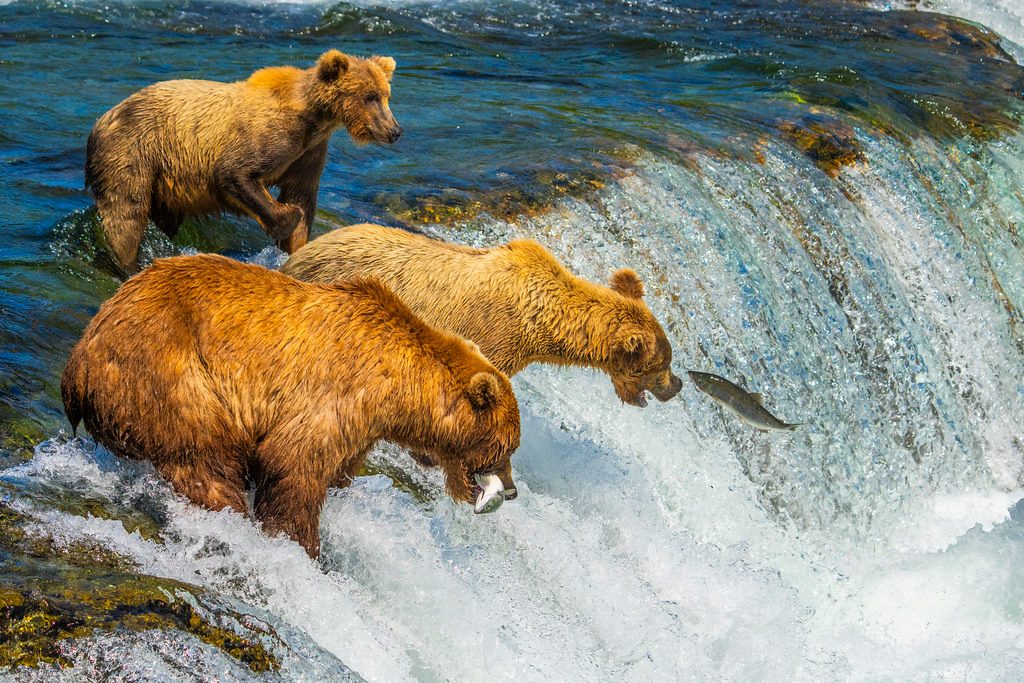
The bears at Brooks River were counted before the visitors were. Katmai National Park & Preserve was proclaimed in 1918 for a volcanic valley, not for wildlife, and the brown bears that now define it were an afterthought in the founding paperwork. Today the Brooks Falls platform overlooks one of the densest concentrations of brown bears on earth, drawn by a sockeye salmon run that pushes millions of fish up a river barely a mile and a half long. Understanding the brooks falls bear viewing best time means understanding that two different spectacles wear the same name. In July, sockeye pile below the falls and cannot pass; bears such as the long-recognised 747 and the fishing veterans of the lip take stations on the ledge, catching salmon mid-air. That is the image most visitors carry in their heads. By September, the run has spawned and died, and the bears move to the lower river and the Brooks Lake outlet to scavenge carcasses — fewer leaping fish, more bears at close range, and often more cubs. August sits between the two, quieter on the falls, though bears remain in the corridor. Anyone comparing Katmai bear viewing seasons should decide which of those two pictures they came for before booking anything. The practical constraint is not the animals but the architecture. Three viewing platforms serve Brooks Camp, and the falls platform holds a limited number of people at a time, managed by a wait list during busy periods. Bear jams — closures of the trail and the floating bridge while animals pass — can add unannounced delays of half an hour or more. Every visitor must first complete the mandatory bear-safety orientation at the Brooks Camp Visitor Center before walking the trail, which means the clock starts later than most people assume. Rangers advise arriving early within the 07:00–19:00 window; float-plane schedules and the day's turnover of visitors compress demand into the middle hours. A brooks falls bear viewing best time strategy that works is simple: pick July for the falls or September for the lower river, land at the beginning of the day rather than the middle, and treat the wait list as part of the visit rather than an obstacle to it. Confirm current conditions directly with Katmai National Park before travelling; salmon runs shift year to year, and so do the bears.
“Two different spectacles wear the same name — July's leaping salmon and September's scavenging bears are not the same visit.”
Understanding the Brooks Falls Bear Viewing Best Time for Optimal Sightings
Peak bear activity at Brooks Falls occurs during July and September when salmon runs draw bears to the river. Plan your visit within the 07:00–19:00 arrival window to manage platform access limits effectively.
July
High congestionMild, 50°F to 65°F
Sockeye salmon run attracts bears to the falls. Expect platform wait times.
August
Moderate congestionVariable, 45°F to 60°F
Bears remain active but transition between food sources. Fewer salmon at the falls.
September
High congestionCool, 40°F to 55°F
Late salmon run brings bears back to the river. Popular time for viewing.
Daily peak hours
High platform demand—
Best arrival window: 07:00–19:00. Arrive early to manage platform access limits.
Verdict: The best time to visit for optimal sightings is during the peak months of July or September, arriving between 07:00 and 19:00.
Planning Your Brooks Falls Bear Viewing Best Time Itinerary
This plan suits day visitors arriving at Brooks Camp on a floatplane and wanting time at both the Falls and Riffles platforms. Allow roughly nine hours on the ground, within the 07:00–19:00 arrival window.
Arrive at Brooks Camp beach
Step off the floatplane at the beach in front of the Brooks Lodge area and drop non-essential bags at the luggage cache. Budget 15 minutes before the mandatory orientation.
Bear school at the visitor center
Attend the required Brooks Camp Visitor Center safety briefing and collect your pin; it runs about 30 minutes and cannot be skipped. Ask the ranger which platform is currently busiest.
Walk to Brooks Falls platform
Follow the 1.2-mile trail past the Brooks River footbridge to the Falls platform. Walking takes 25–35 minutes, and the footbridge may hold you if bears are on the riverbank.
First Falls viewing session
Join the wait list at the base of the Falls platform stairs. Ranger-managed rotations cap platform time at roughly one hour when a queue forms, so expect 30–60 minutes of waiting before your slot.
Riffles and Lower River platforms
Backtrack to the Riffles platform and the Lower River platform near the footbridge, where there is no rotation limit. Spend 60–90 minutes here while the Falls queue peaks.
Lunch and Dumpling Mountain trail
Eat at the picnic area near the beach, then walk the first section of the Dumpling Mountain trail to the 1.5-mile overlook. Round trip is about 90 minutes.
Second Falls rotation
Return to the Falls platform for a second session; afternoon queues are usually shorter than mid-morning ones. Recheck the wait list before climbing the stairs.
Return to the beach for departure
Retrieve stored gear and reach the beach at least 30 minutes before your scheduled flight. Bear activity on the trail can add unplanned delays.
Transportation Logistics for Your Brooks Falls Bear Viewing Best Time Trip
Brooks Camp is situated within the remote Katmai National Park & Preserve, accessible only by air or boat. Most visitors travel by air taxi from King Salmon to the Brooks Camp floatplane dock.
Water taxi from King Salmon to Brooks Camp
Flight from King Salmon to Brooks Camp
Brooks Falls Bear Viewing Best Time Operating Hours
Katmai National Park and Preserve remains accessible 24 hours a day throughout the week. While the grounds are open at all times, management of the bear viewing platforms is subject to site-specific regulations.
| Monday | 00:00–23:59 | Open daily |
|---|---|---|
| Tuesday | 00:00–23:59 | Open daily |
| Wednesday | 00:00–23:59 | Open daily |
| Thursday | 00:00–23:59 | Open daily |
| Friday | 00:00–23:59 | Open daily |
| Saturday | 00:00–23:59 | Open daily |
| Sunday | 00:00–23:59 | Open daily |
Essential Preparation for Your Brooks Falls Bear Viewing Best Time Visit
Brooks Camp sits in remote wilderness with limited infrastructure, so most of the preparation that matters happens weeks before you arrive.
-
Reserve floatplane seats months ahead — Air taxi capacity to Brooks Camp is limited and fills early for July and September.
-
Secure lodging or a campsite — Brooks Lodge and the campground are the only accommodation, and both are allocated well in advance.
-
Carry photo ID for air travel — Air taxi operators verify passenger identity before boarding.
-
Complete the mandatory bear etiquette briefing — Every visitor must attend the ranger talk at the Visitor Center before using the trails.
-
Pack waterproof layers and rubber boots — Weather shifts quickly and trails between the platforms stay wet.
-
Bring all food in sealed containers — Food is only permitted in designated caches and eating areas, never on the trails.
-
Plan for platform waiting times — Viewing platforms have capacity limits, so expect a queue during the 07:00–19:00 arrival window.
-
Call 907-246-3305 to confirm conditions — Park staff can flag closures, bear activity, or weather delays before you fly.
Check availability
Frequently Asked Questions About Brooks Falls Bear Viewing
Everything you need to know about brooks falls bear viewing best time