6 hr 30 min
Katmai Bear Viewing: Brooks Falls Floatplane Day Trip
- Expert local guide
- Small group
- Skip-the-line access
- Free cancellation
Brooks Falls Bear Viewing From Homer — Floatplane Day Trips to Katmai
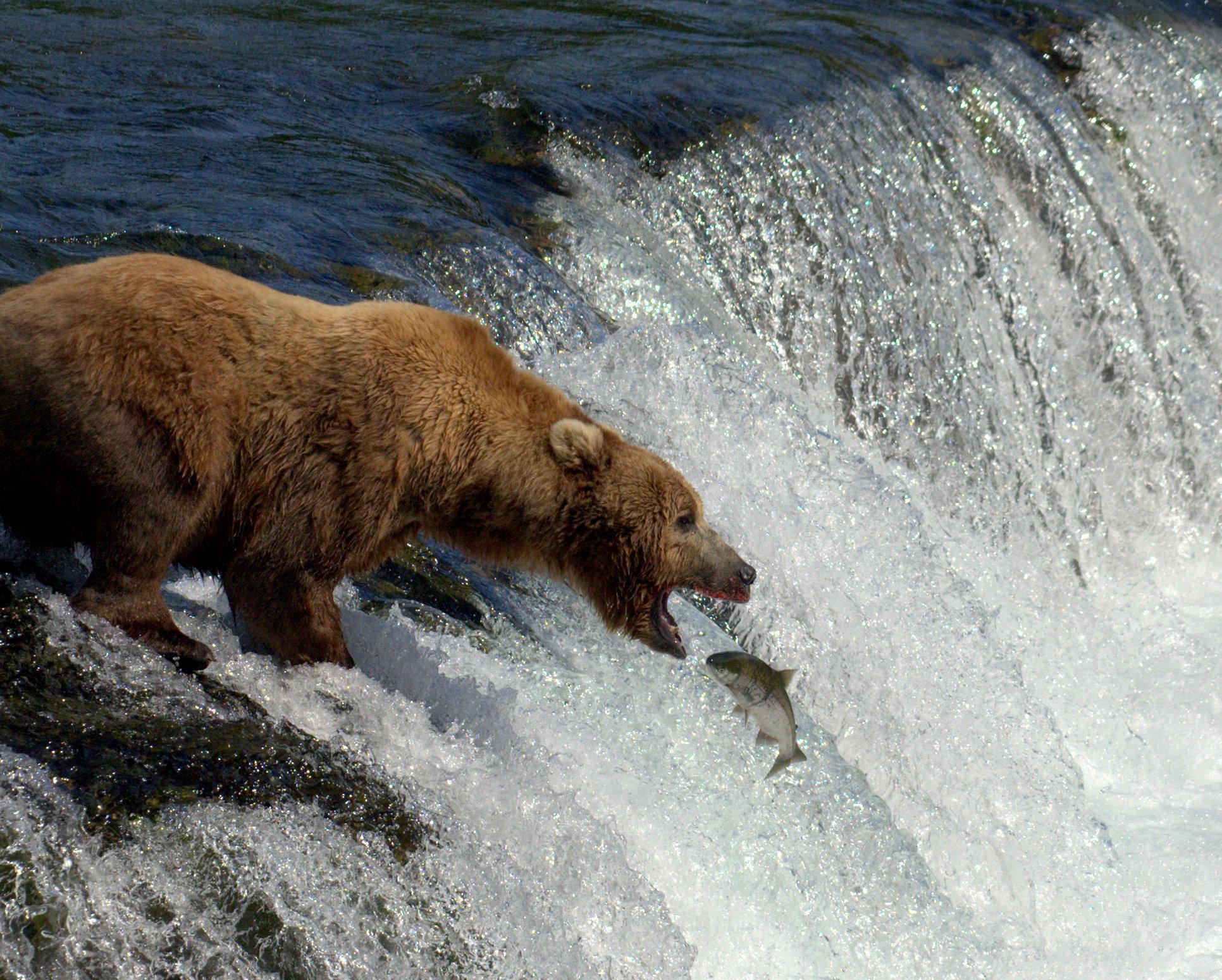
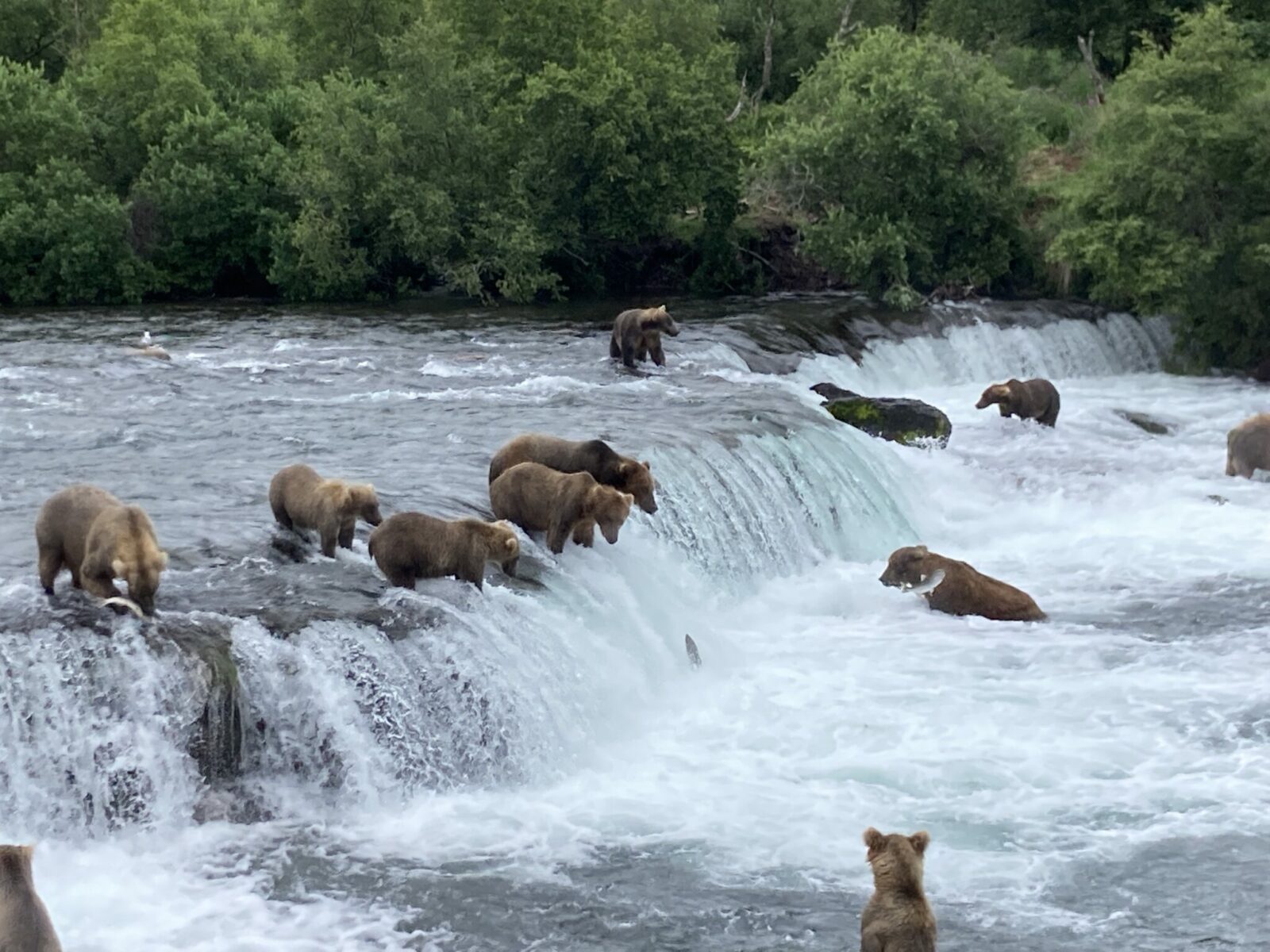
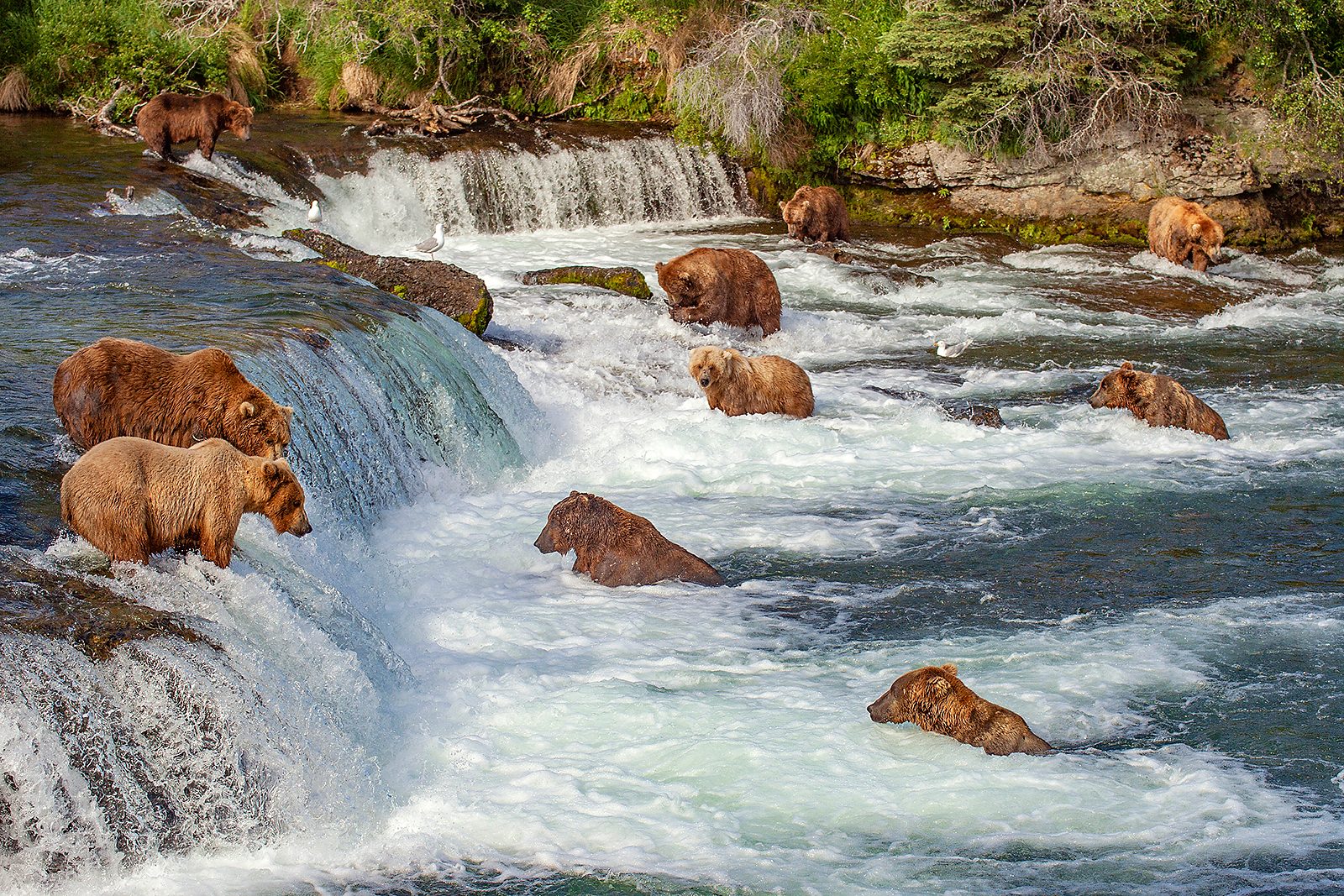
Wheels lift from Kachemak Bay, salmon leap into waiting jaws.
Compare fares, pick the fit — all bookings are mobile-voucher and eligible for free cancellation where shown.
6 hr 30 min
6 hr
3 hr
| Experience | Duration | Rating | Skip-the-line | Guide | Small group | Free cancel. | Price | |
|---|---|---|---|---|---|---|---|---|
|
Guided Experience
Most popular
Katmai Bear Viewing: Brooks Falls Floatplane Day Trip
|
6 hr 30 min | ★ 4.8 | ✓ | ✓ | ✓ | ✓ | €1336 | Book → |
|
Guided Experience
Brooks Falls Bear Viewing Floatplane Adventure
|
6 hr | ★ 4.7 | ✓ | ✓ | ✓ | ✓ | €1297 | Book → |
|
Standard Entry
Pratt Museum Entry – Kenai Peninsula's Cultural & Natural History Hub
|
3 hr | ★ 5.0 | — | — | — | ✓ | €13 | Book → |
Worth it once, for serious wildlife travelers
Katmai charges nothing to enter — the entrance fee is 0 USD, no pass required — so every dollar you spend on brooks falls bear viewing from homer buys the floatplane seat, the pilot, and the guide, not the park. That is the honest value math: the flight across Cook Inlet is the product. What you get in return is the elevated platform above the falls, brown bears fishing sockeye salmon a short distance below, and a stretch of coastline you cannot reach by road. Priced against a glacier cruise or a museum ticket, it is the biggest single line item on a Kenai Peninsula trip. It pays off for photographers, birders and anyone who came to Alaska specifically for bears. If wildlife is a nice-to-have rather than the reason you flew north, a Kenai Fjords cruise delivers more animals per dollar.
Bottom line: Book the brooks falls bear viewing from homer tour if bears are why you came to Alaska; otherwise put the money into a Kenai Fjords cruise.
They complement each other; most visitors who do both call Lake Clark the more intimate encounter, while Brooks Falls remains the superior location for witnessing salmon hunting behavior. Choosing the right brooks falls bear viewing from homer tour depends on whether you prioritize structured wildlife observation or wild coastal landscapes.
|
Top pick Brooks Falls (Katmai) |
Lake Clark Bear Viewing | |
|---|---|---|
| Bear Behavior | Salmon fishing at falls | |
| Primary Landscape | River and forested trails | |
| Viewing Platform Style | Elevated boardwalks | |
| Travel Complexity | Requires multiple flight legs | |
| Primary Activity | Wildlife observation from platforms | |
| Coastal Access | None — inland freshwater site | |
| See tickets & prices |
Verdict: Select your brooks falls bear viewing from homer tickets if you want to see iconic salmon-snatching action, or choose Lake Clark for a more solitary experience with coastal grizzlies.
Hand-picked experiences loved by thousands of travelers
4 hours 45 minutes
Free Cancellation
Fly by bushplane to Lake Clark National Park and spend hours observing brown bears in wild coastal habitat
6 hours
Free Cancellation
Six-hour voyage past calving glaciers, breaching whales, and seabird colonies in Alaska's fjords
7 hours
Free Cancellation
Seven-hour expedition through Alaska's fjords with whales, glaciers, and expert-led wildlife spotting
9 days
Free Cancellation
Journey from Denali's peaks to coastal fjords and encounter brown bears in remote Lake Clark
All the details about your upcoming adventure in one place
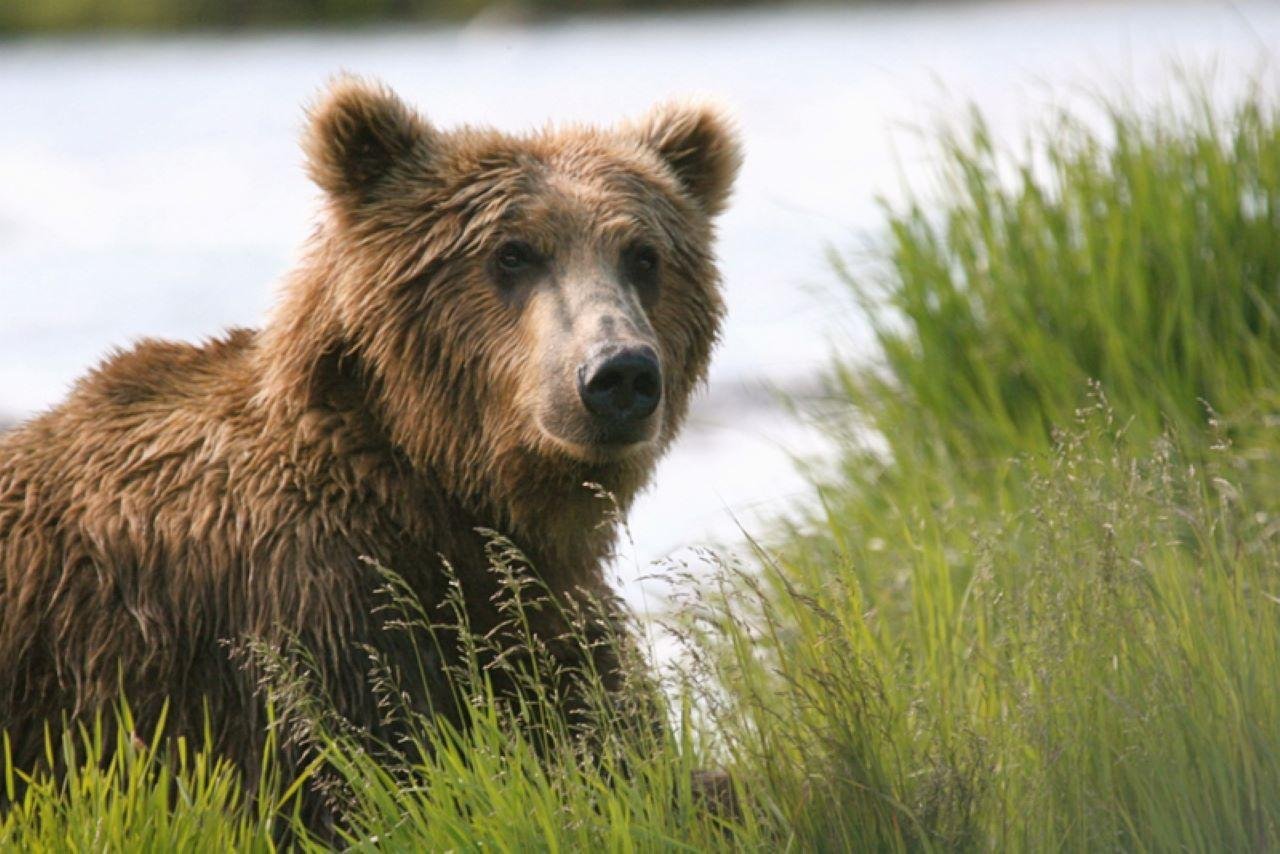
The Brooks River runs barely 1.5 miles from lake to lake, yet in midsummer it can hold more brown bears per mile than any river in North America. Brooks Falls bear viewing from Homer tours exist for one blunt geographic reason: no road reaches this water.
Katmai National Park and Preserve covers roughly four million acres of the Alaska Peninsula — volcanic ridges, braided rivers, tundra scoured by wind off the Shelikof Strait. It was proclaimed a national monument in 1918, six years after the Novarupta eruption buried the Valley of Ten Thousand Smokes under ash, and became a national park and preserve in 1980. Bears, not geology, now carry its name. An estimated 2,200 brown bears range across the park, and a good share of them converge on a single six-foot ledge where sockeye salmon stall on the climb toward Brooks Lake. Alaska Peninsula bear viewing concentrates here for a simple reason: the falls are a wall, and the fish must jump.
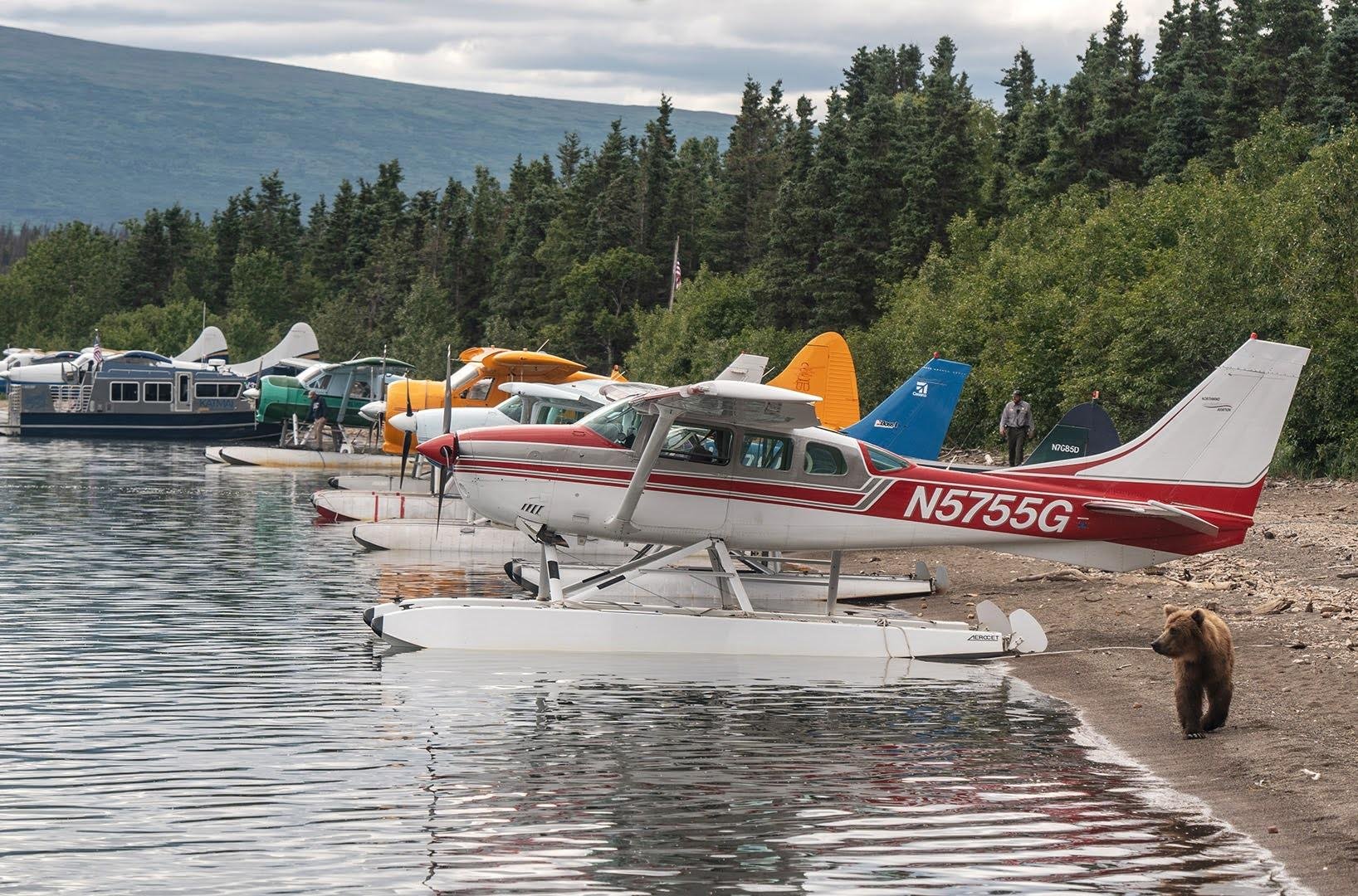
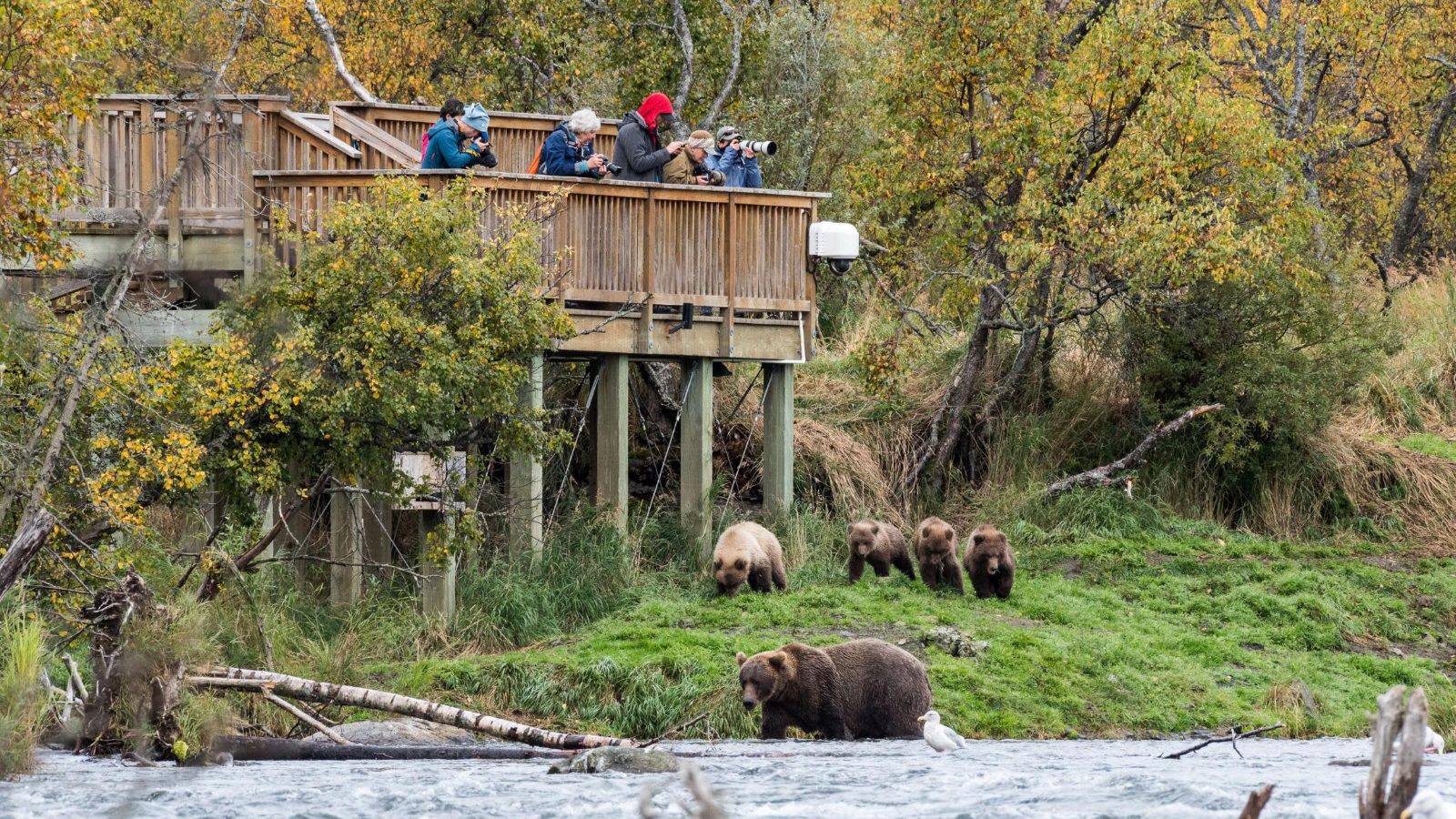
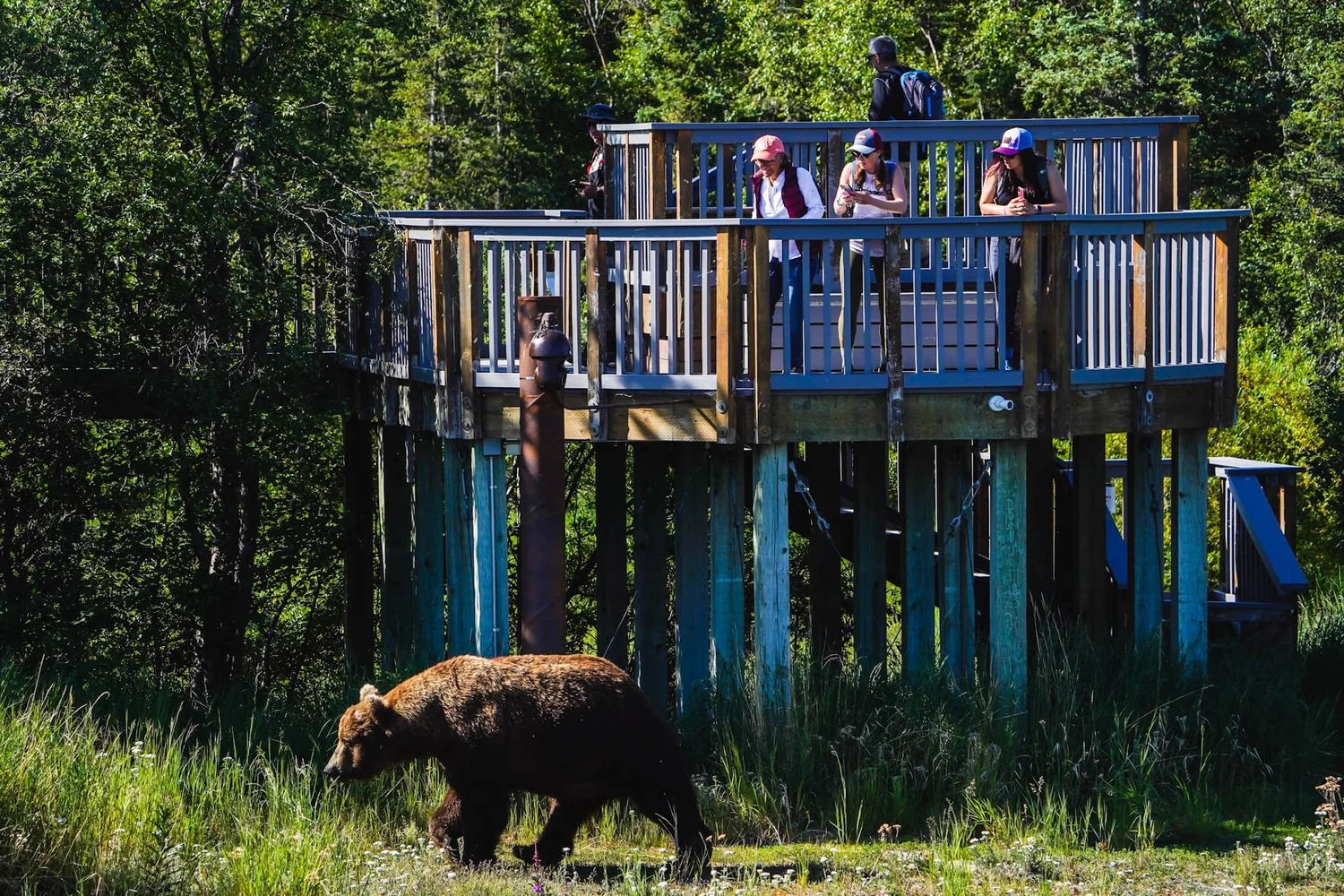
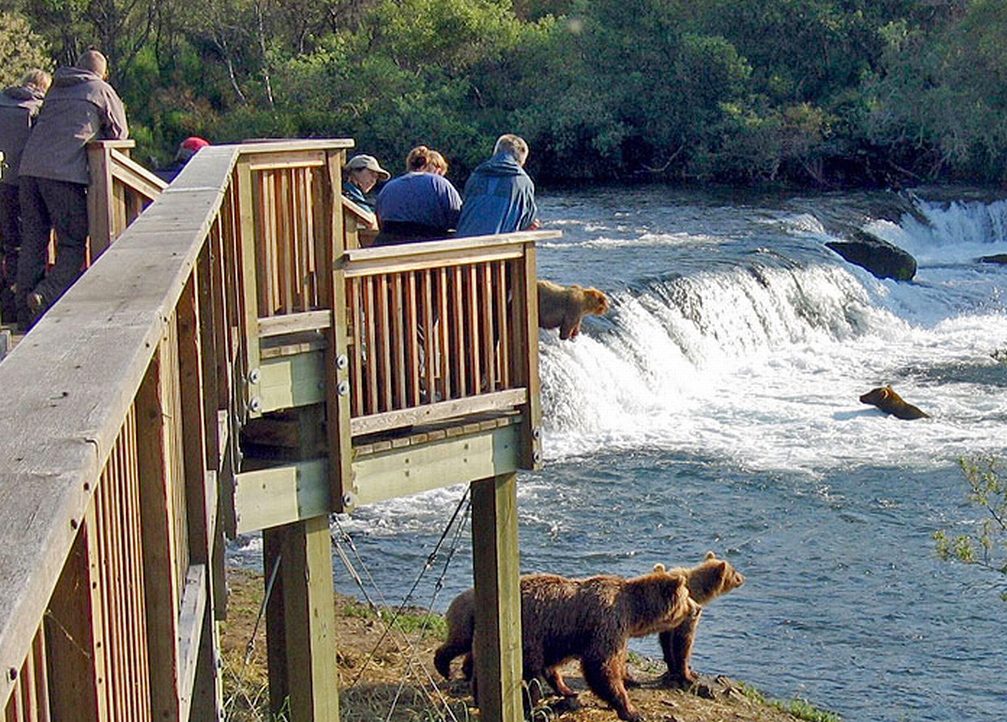
The built environment is deliberately modest. A floatplane beach and a short gravel strip serve Brooks Camp, at the mouth of the river on Naknek Lake. From there a graded path leads to an elevated bridge, opened in 2019, that lifts foot traffic clear of the bears' travel corridor. Three wooden platforms follow — the Riffles, the Lower River, and the Falls platform itself, a railed deck standing within about seventy feet of the cascade and capped at roughly forty people at a time. Nothing here is monumental. The architecture amounts to catwalks and handrails; the spectacle belongs entirely to the animals.
That restraint is the point. Access to the park costs 0 USD — Katmai charges no entrance fee and requires no entrance pass — so the expense of reaching it is aircraft, not admission, and the address on any itinerary reads simply Brooks Camp, Katmai National Park and Preserve, AK. The camp keeps no gate: hours run 00:00–23:59, every day of the week. What limits the experience is weather, daylight and the tide of fish. Katmai bear viewing by floatplane remains one of the few wildlife encounters in North America measured in feet rather than lenses, and a Brooks Falls bear viewing from Homer tour compresses that encounter into a single day across Cook Inlet — Kachemak Bay in the morning, the Aleutian Range at noon, salmon in the air by afternoon.
The architecture amounts to catwalks and handrails; the spectacle belongs entirely to the animals.
Policy varies by individual float plane operator. Most tours require booking in advance, with specific terms regarding weather-related cancellations common for this region.
The story begins with catastrophe. In June 1912, Novarupta erupted, burying the Ukak River valley in ash and creating the Valley of Ten Thousand Smokes. President Woodrow Wilson proclaimed Katmai National Monument in 1918 to protect that volcanic landscape. Bears were an afterthought. Yet the Brooks River corridor, a mile-and-a-half link between Brooks Lake and Naknek Lake, had drawn people for some 4,500 years; archaeologists have recorded over 900 depressions from semi-subterranean dwellings along its terraces, and the site was designated a National Historic Landmark in 1993. Brooks Camp opened in 1950 as a fishing lodge run by Ray Petersen's Northern Consolidated Airlines, one of five camps in his Angler's Paradise chain. Anglers came for rainbow trout and sockeye salmon. The brown bears came for the same salmon, and the two crowded the same gravel bars. Coexistence was improvised and often ugly. Bears were fed, photographed at close range, and occasionally shot. The 1970s and 1980s brought a rethinking: food caches, an electric-fenced campground, and the mandatory bear etiquette talk that still precedes any visit today. Most travelers now arrive by air, and brooks falls bear viewing from homer became a defined day-trip route across Cook Inlet rather than a week at a lodge. The engineering that made the modern scene possible is modest but decisive. A wooden platform at the falls, first built in the early 1980s and rebuilt and expanded in 2019 alongside an elevated boardwalk, separated people from the animals vertically instead of by distance. That same year a floating bridge replaced the old pontoon crossing at the river mouth. Live webcams, introduced in 2012, exported the falls to a global audience and turned individual bears into named subjects of study. What survives is a hybrid: a working research station, a National Historic Landmark, and a viewing epicenter where visitors on brooks falls bear viewing from homer tours stand above a chute the salmon have used far longer than the platform has existed. Katmai charges no entrance fee, and the park itself never closes.
Novarupta erupted, burying the Ukak valley in ash and forming the Valley of Ten Thousand Smokes.
President Woodrow Wilson proclaimed Katmai National Monument by presidential decree.
Ray Petersen opened Brooks Camp as part of the Angler's Paradise fishing camp chain.
Katmai was redesignated a national park and preserve under ANILCA.
The first wooden viewing platform at the falls formalized the separation of visitors and brown bears.
The Brooks River Archeological District, with over 900 recorded house depressions, became a National Historic Landmark.
Live streaming webcams at the falls brought the salmon run to a worldwide audience.
A rebuilt elevated boardwalk and a new floating bridge replaced the aging river crossing and platforms.
This elevated viewing deck offers the iconic perspective of bears catching salmon at the precipice. A telephoto lens of 300mm or greater is recommended for detailed shots, and you may encounter wait times due to capacity limits during brooks falls bear viewing from homer excursions.
Positioned downstream from the main ledge, this platform provides excellent angles for capturing fish jumping and bears wading in shallower water. It serves as a popular alternative for those securing brooks falls bear viewing from homer tours to avoid peak platform congestion.
This area allows for shots of bears traveling along the riverbanks near the lodge and bridge. It is frequently included in a brooks falls bear viewing from homer tour to capture wider environmental compositions of the coastal landscape.
Standing on the bridge offers a unique vantage for photographing bears moving between the lower river and the falls area. Please observe all National Park Service distance regulations while capturing your shots during your brooks falls bear viewing from homer tickets experience.
Visiting Katmai National Park for brooks falls bear viewing from homer is a wilderness adventure that requires careful planning, as the park is a remote, natural habitat rather than a zoo. Families should be prepared for a rustic experience where wildlife safety is the priority and patience is essential for successful sightings.
Strollers are not practical on the trails, so plan to bring a comfortable child carrier backpack for younger children. The paths to the platforms are a mix of boardwalk and gravel that are generally flat but not suitable for wheels.
While there is no strict age limit, experts recommend the experience for children aged 7 and up who can remain quiet and follow safety instructions. Younger children may find the long wait times for bear activity challenging and need constant supervision at all times.
Restroom facilities are available at Brooks Camp, but they are basic and do not offer specialized baby-change stations. Be sure to carry all necessary supplies with you, as services are limited in this remote environment.
Expect a 1.2-mile walk to the viewing platforms, which can take time when accounting for mandatory bear safety stops. It is best to choose brooks falls bear viewing from homer tours that allow for flexible timing to accommodate the needs of your family.
Every visitor must attend a mandatory bear safety orientation upon arrival, which is a required step for all Katmai landmarks. Ensure children understand the importance of staying close and quiet to keep both your family and the local wildlife safe during your brooks falls bear viewing from homer tickets experience.
Dining options are extremely limited, so pack snacks to be stored in designated bear-resistant areas. Remember that food cannot be consumed outside of authorized zones, so plan your meal breaks around the lodge facilities or picnic areas.
Visitors planning brooks falls bear viewing from homer should note that dining options within Katmai National Park are extremely limited, making it essential to prepare accordingly for your wilderness excursion. While planning your brooks falls bear viewing from homer tour, remember that most travelers pack their own food to enjoy while observing the salmon run and coastal brown bears.
The only facility at Brooks Camp providing meals; reservations are required well in advance for those not staying in lodge accommodations. It serves as a rare outpost for hot food near the viewing platforms, though brooks falls bear viewing from homer tickets do not guarantee access to lodge meals during peak hours.
Since there are no casual cafes or grocery stores on-site, travelers often secure packed meals from Homer outfitters before their flight departs. These reliable options ensure you have sustenance while exploring the remote Alaskan wilderness near Katmai landmarks.
Everything you need to know for your journey
July and September are the peak months for brooks falls bear viewing from homer.
Tripod use is restricted on the platforms during peak hours of brooks falls bear viewing from homer.
No entrance reservation is required to enter, but local platform management may apply during busy times.
Join thousands of happy travelers who have discovered this incredible experience
Book Your Experience Now