
Quick answer
Entry to Katmai National Park costs 0 USD — free entry, with no entrance fee — and the site at Brooks Camp is accessible around the clock, 00:00–23:59 daily. The real limit is capacity: when the deck is full, rangers run a rotating waitlist. Arriving between 07:00–18:00 avoids mid-day peak crowds and waitlists for platform access.
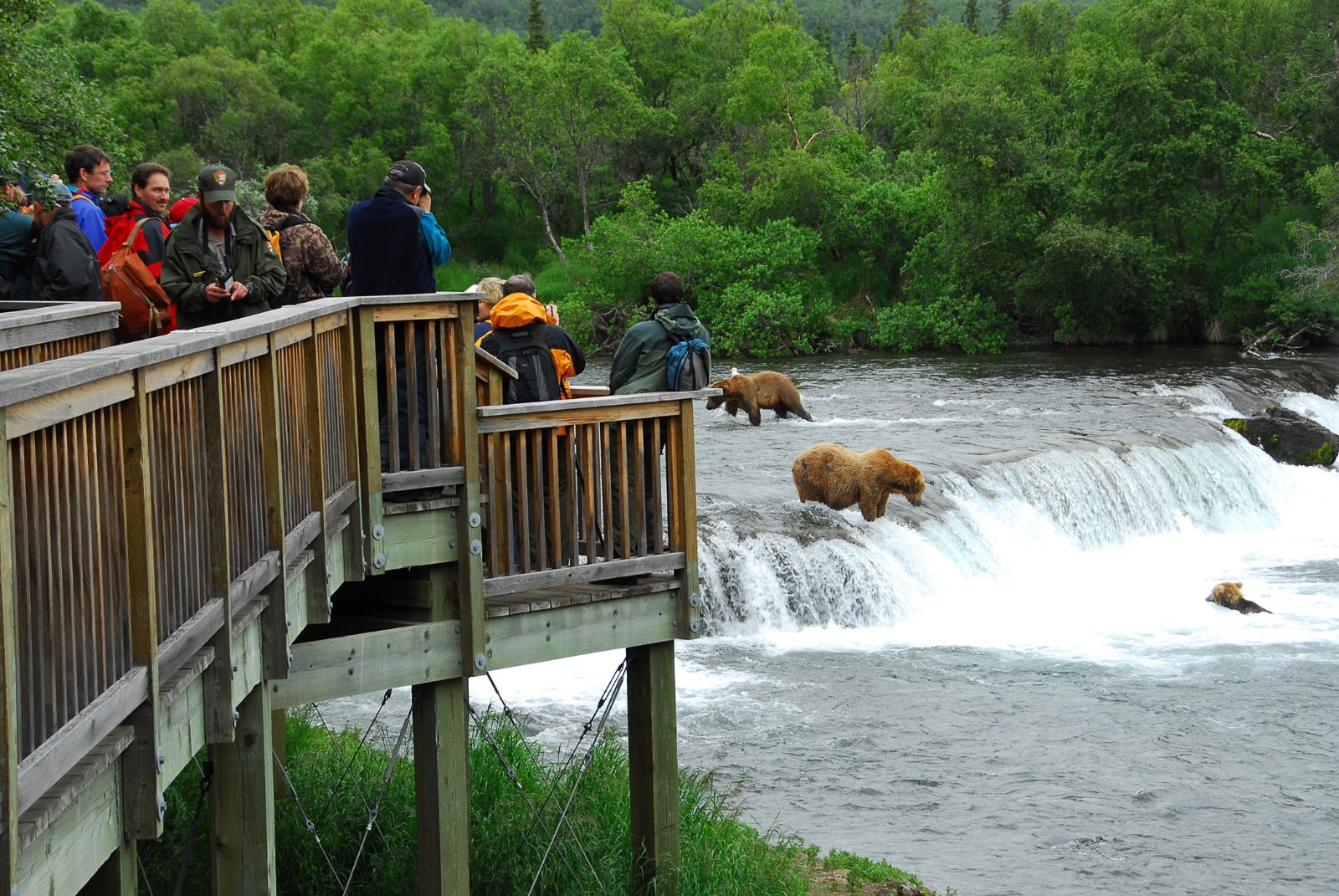
Bears at Brooks River are individually catalogued, and some of the animals fishing the falls have been recognised by rangers for more than twenty seasons. That continuity is the reason a modest elevated deck on a remote Alaskan river became the reference point for brown bear behaviour worldwide. The brooks falls bear viewing platform is not a scenic overlook bolted onto a road; it sits at the end of a boardwalk system in a place with no highway access, where every visitor arrives by floatplane or boat and passes through a mandatory bear etiquette briefing at the visitor centre before walking anywhere. What this means practically is that the constraint on a visit is rarely money and rarely the clock. Katmai brown bear viewing is governed by space. The deck holds a limited number of people at once, and when it fills, rangers operate a rotating waitlist at the bridge across the Brooks River, calling names in order and granting a set stretch of time before the next group cycles through. Salmon runs drive the rhythm: the sockeye push in early summer brings the standing-in-the-cataract fishing that defines the site's photographs, and a later autumn return brings heavier, fatter animals. Between those peaks the falls can be quiet, and the lower river or the riffles draw more activity. The boardwalk network also matters. Separate decks serve the falls, the riffles and the mouth of the river, and bear traffic on the connecting trails routinely halts pedestrian movement altogether — a closure that can last minutes or considerably longer. Visitors budgeting a day trip should treat those interruptions as certainties rather than exceptions, because a missed return flight is the most common failure of an otherwise well-planned itinerary. Use this understanding to sequence the trip rather than to optimise a single hour. Secure the flight and, where relevant, the campground or lodge reservation first; those sell out far earlier than anything on the ground here does. Confirm current conditions with Brooks Camp at +1-907-246-3305 or through the National Park Service at https://www.nps.gov/katm/index.htm, since river levels, fish counts and trail closures shift week to week. The brooks falls bear viewing platform rewards the visitor who arrives with slack in the schedule, a long lens, and the patience to let a rotation or two pass. Addresses, transport chains and conduct rules are covered in the sections below.
“The constraint on a visit here is rarely money and rarely the clock — it is space on a wooden deck above a six-foot waterfall.”
Optimal Timing for Visiting the Brooks Falls Bear Viewing Platform
The most effective time to visit is during the peak salmon run in July, when bear activity is at its highest. To ensure access to the platform and avoid extended waitlists, planning your visit within the optimal daily arrival window of 07:00–18:00 is essential.
Early July
High density of bears50°F–65°F; frequent rain
Salmon begin migrating upstream, drawing bears to the falls for feeding.
Late July
Maximum bear activity50°F–65°F; variable conditions
This period typically sees the highest number of bears competing for salmon at the falls.
September
Moderate bear activity35°F–55°F; cooler temperatures
Bears return to the river in the fall, though salmon runs are diminished compared to mid-summer.
Daily arrival window
Avoids peak crowds—
Arriving between 07:00–18:00 helps manage waitlists for limited platform capacity.
Verdict: The best time to visit is mid-July, arriving between 07:00–18:00 to balance high bear activity with manageable access to the viewing platforms.
Operating Hours for the Brooks Falls Bear Viewing Platform
The Brooks Falls bear viewing platform operates on a continuous schedule, remaining accessible throughout the week to accommodate visitors. The platform is open daily from Monday through Sunday.
| Monday | 00:00–23:59 | |
|---|---|---|
| Tuesday | 00:00–23:59 | |
| Wednesday | 00:00–23:59 | |
| Thursday | 00:00–23:59 | |
| Friday | 00:00–23:59 | |
| Saturday | 00:00–23:59 | |
| Sunday | 00:00–23:59 |
Entrance Fees and Costs for the Brooks Falls Bear Viewing Platform
There is no entrance fee to visit Katmai National Park & Preserve, and access to the Brooks Falls bear viewing platforms is free of charge. Visitors should note that while park entry costs nothing, significant expenses are associated with the required air travel to reach Brooks Camp.
A typical adult pays 0 USD for park entry, with total trip costs depending entirely on commercial transportation arrangements to Brooks Camp.
How to Reach the Brooks Falls Bear Viewing Platform
Brooks Falls is located in the remote wilderness of Katmai National Park and Preserve. Visitors must first reach King Salmon, Alaska, and then secure air taxi or boat transport to access Brooks Camp.
Floatplane from King Salmon to Brooks Camp
Water taxi from King Salmon across Naknek Lake
From Brooks Camp beach to Brooks Falls platform
Conduct and Safety Rules at the Brooks Falls Bear Viewing Platform
Brooks Camp puts visitors within metres of wild brown bears, so conduct rules are enforced by park rangers rather than left to personal judgement. Every visitor must complete the mandatory bear etiquette orientation at the Visitor Center before walking to the platforms.
Do
- Attend the mandatory bear school orientation before accessing any trail or platform
- Store all food and scented items in the designated food cache
- Speak quietly and keep conversation to a low volume on platforms
- Yield the platform after roughly one hour when a waitlist forms
- Follow ranger instructions immediately, including bridge closures and platform evacuations
- Stay at least 50 yards from bears and 100 yards from mating pairs
Don't
- Never eat, drink or carry open food beyond the designated eating area
- Do not run, shout or make sudden movements if bears approach
- Do not lean over, climb or sit on the platform railings
- Never position yourself between a sow and her cubs
- Do not linger on the floating bridge or trails to watch bears
- Do not bring pets, drones or unsecured backpacks to the platforms
What to See at the Brooks Falls Bear Viewing Platform Complex
The Brooks Falls bear viewing complex consists of three distinct platforms providing various vantage points to observe brown bears in their natural habitat. Visitors can move between these locations to gain different perspectives of bear activity along the Brooks River.
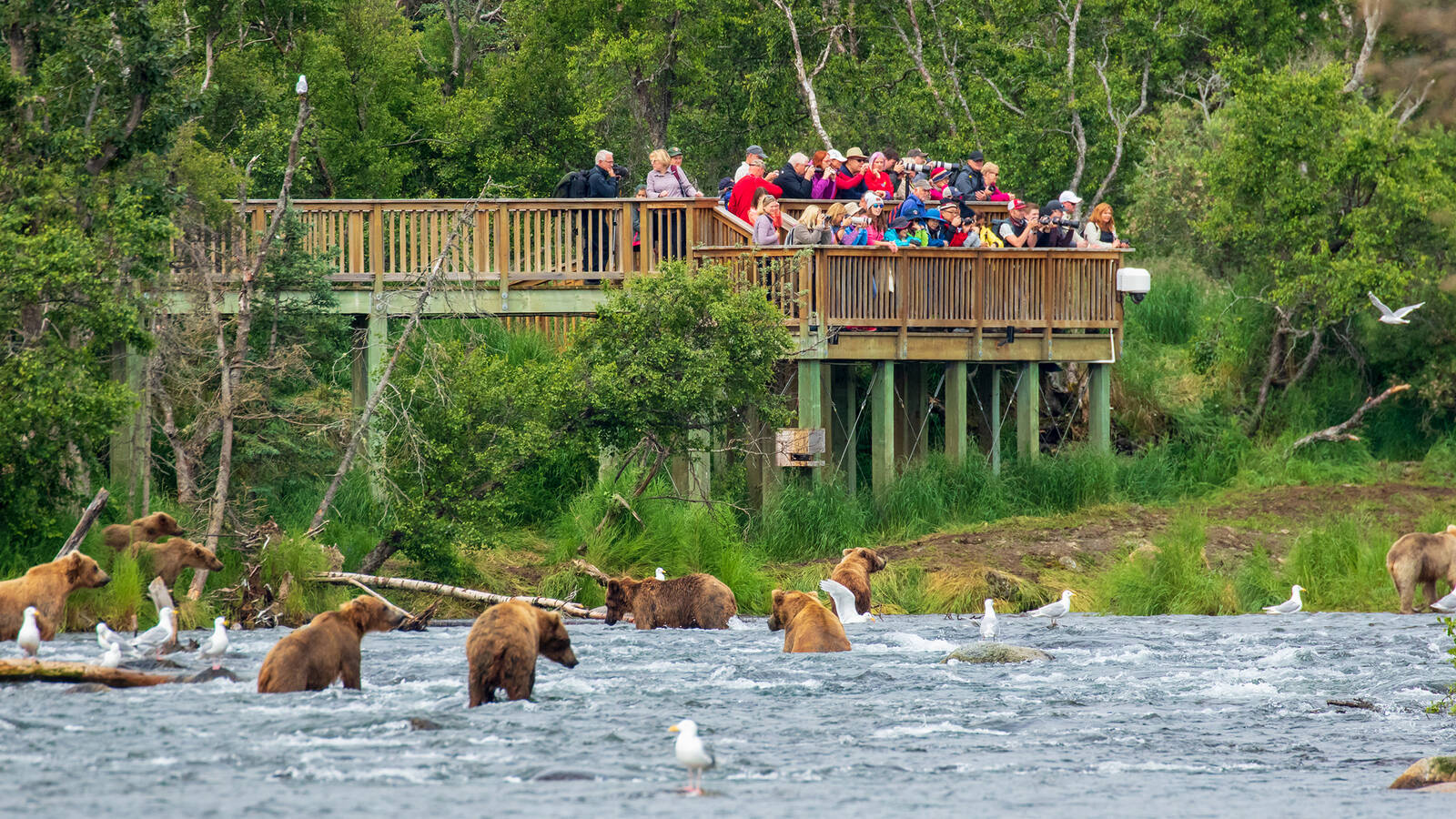
Brooks Falls Platform
This primary platform overlooks the waterfall where bears congregate to fish for sockeye salmon during the run. It offers a direct, elevated view of the iconic falls and the most concentrated bear activity.
Arrive early to secure a spot when bears are most active.
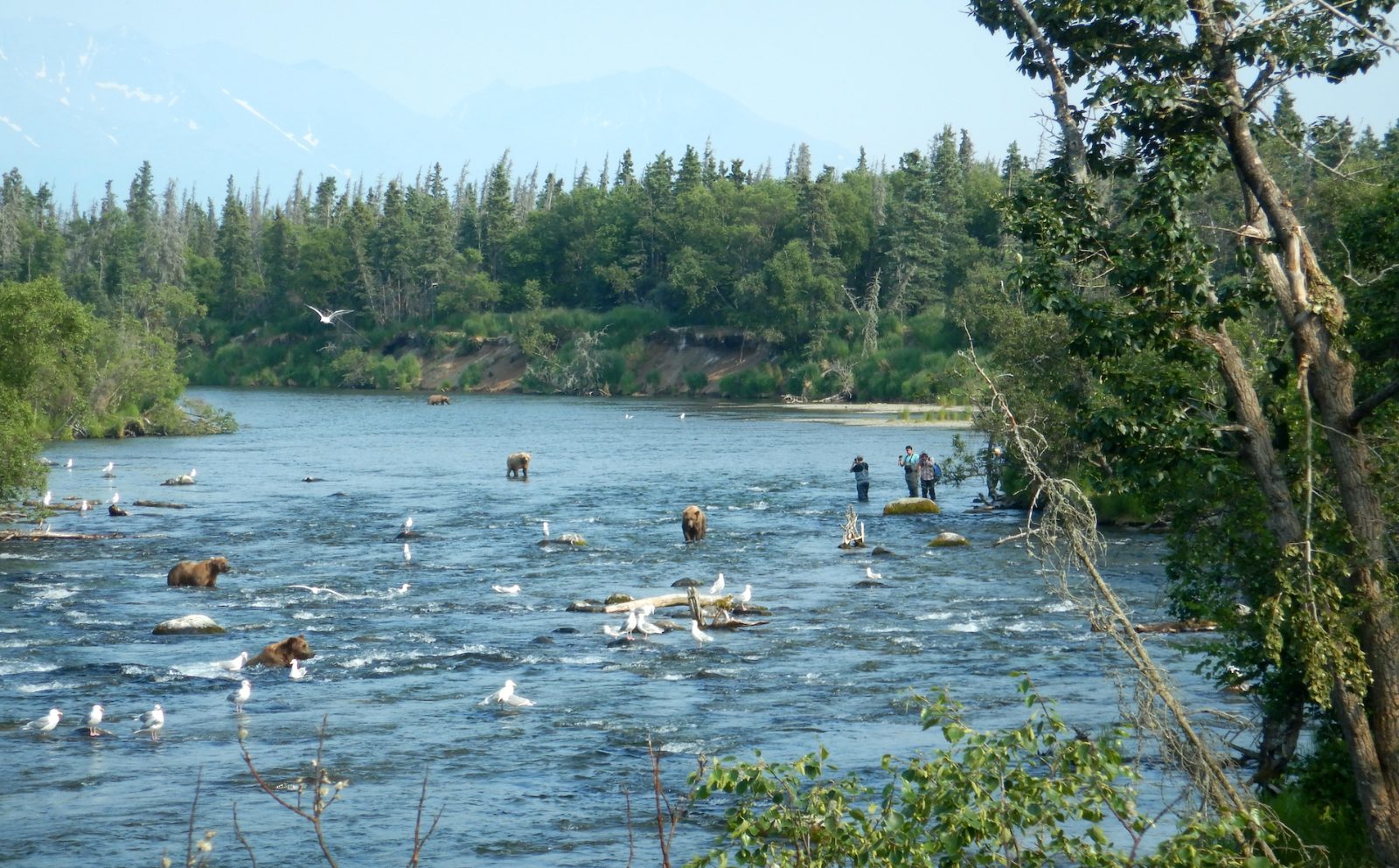
Riffles Platform
Located downstream from the falls, this platform provides a wider perspective of the river and bears wading through shallower water. It is often less crowded than the main falls area.
Use binoculars to scan the riverbanks for bears further downstream.
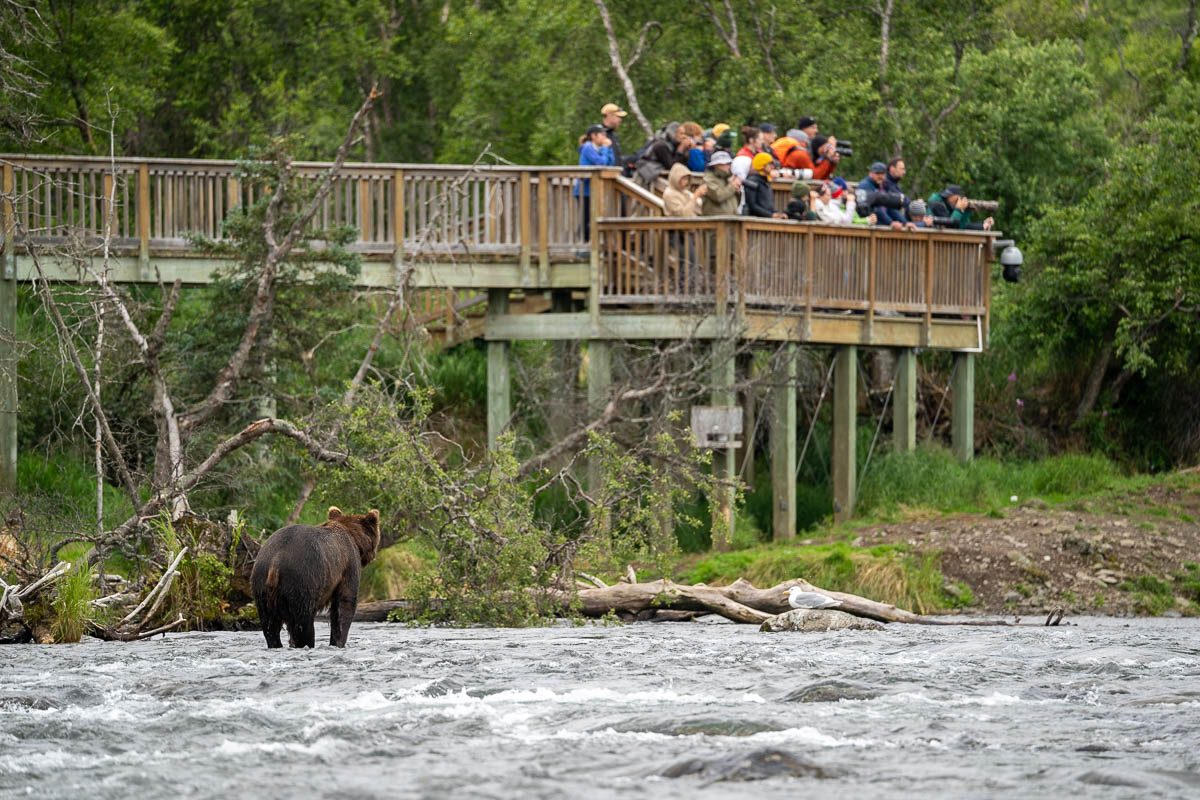
Cutbank Platform
Situated near the edge of the river, this platform offers a view of the high dirt banks where bears frequently walk or rest. It provides a lower vantage point compared to the other structures.
Check this location if the falls area reaches maximum capacity.
Check availability
Common Questions About Brooks Falls Bear Viewing Platform
Everything you need to know about brooks falls bear viewing platform