

Quick answer
Entry to Katmai National Park is free — 0 USD — and Brooks Camp facilities operate 07:00–22:00, seven days a week. The recommended arrival window for photographers is 17:00–22:00, once day visitors depart by floatplane and platform waits shorten. The catch: bear activity follows the salmon, not the clock, so late light and peak fish runs do not always align.
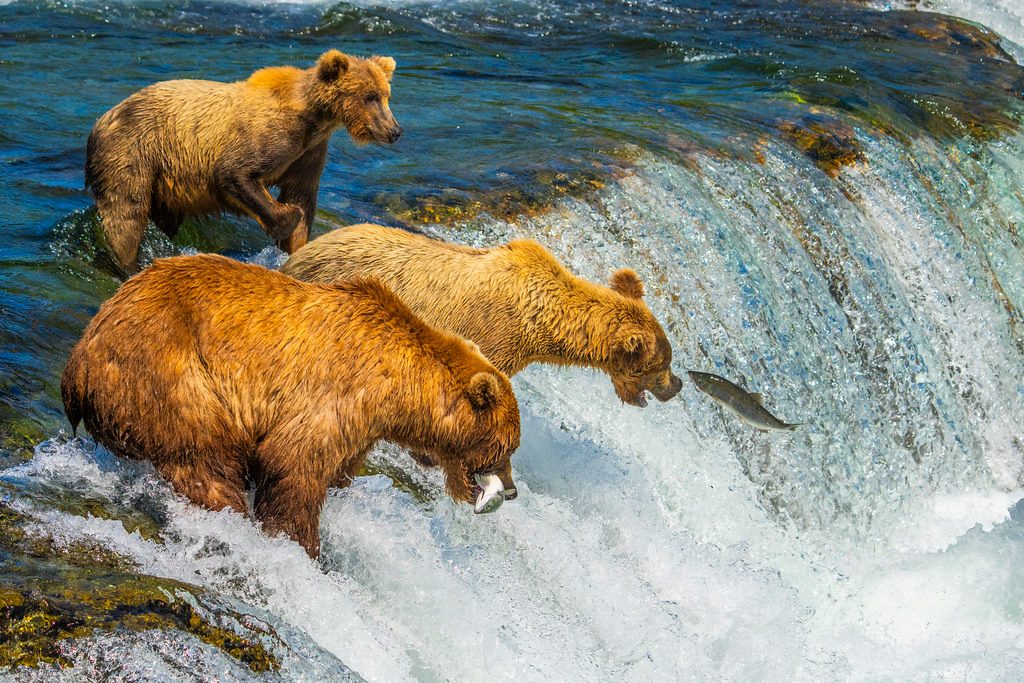
The falls themselves are barely two metres high. That modest step in the Brooks River is enough to stall a sockeye salmon mid-migration, and it is the reason a dozen or more brown bears may occupy a stretch of water the length of a tennis court. Nowhere else in Alaska concentrates Ursus arctos so densely in front of a fixed, legal vantage point. This is why brooks falls bear photography exists as a genre rather than an accident of luck. What the visitor is actually dealing with is a permit-free but tightly managed environment. Katmai National Park and Preserve charges no entrance fee, yet access is rationed by geography: Brooks Camp sits on the shore of Naknek Lake with no road connection, and every arrival comes by floatplane or boat. Mandatory bear-safety orientation precedes any walk to the river. From there, an elevated boardwalk leads past the lower river and the Riffles platform to the main falls viewing deck, where staff rotate visitors through when demand is high. The deck is the constraint that shapes every decision about gear — tripod room is limited, and a 400mm lens on a monopod is often the pragmatic compromise. Overcast Alaskan skies do more work than most photographers expect, flattening contrast between wet black fur and white water. Season governs everything. The July sockeye run puts bears on the lip of the falls in the classic standing pose; by late summer and early autumn, animals shift downstream to scavenge spent salmon, and the same subject demands a different frame entirely. Anyone planning katmai brown bear viewing in the second half of August 2026 should expect the lower river and Naknek Lake shoreline to be more productive than the falls lip itself. Weather cancels flights routinely, so a single-day itinerary is a gamble. The practical use of all this is scheduling. Because facilities run a uniform daily pattern and day-trippers cluster in the middle hours, the evening block rewards patience: fewer people on the boardwalk, longer platform turns, and low northern light that lasts. Treat brooks falls bear photography as an exercise in waiting rather than hunting. The dedicated sections on this site cover exact hours, arrival logistics, platform etiquette and the strongest shooting positions in detail — read them before booking any flight into the park.
“The falls are barely two metres high; that modest step is the whole reason the bears are there.”
Top Brooks Falls Bear Photography Locations and Viewpoints
Falls Platform
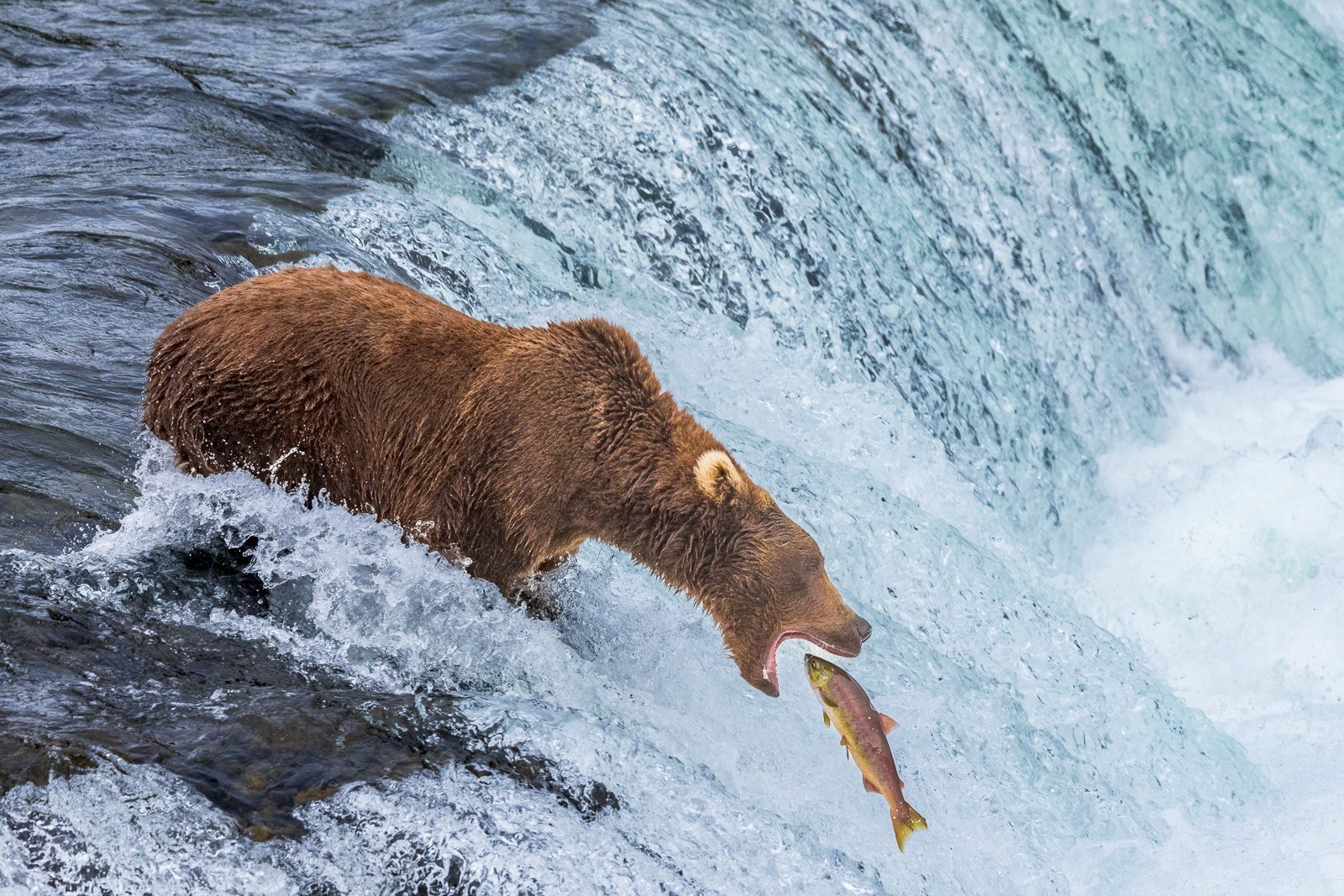
This elevated platform provides a direct view of the main waterfall where bears congregate to catch jumping salmon. It is the most popular spot for high-action wildlife sequences.
Riffles Platform
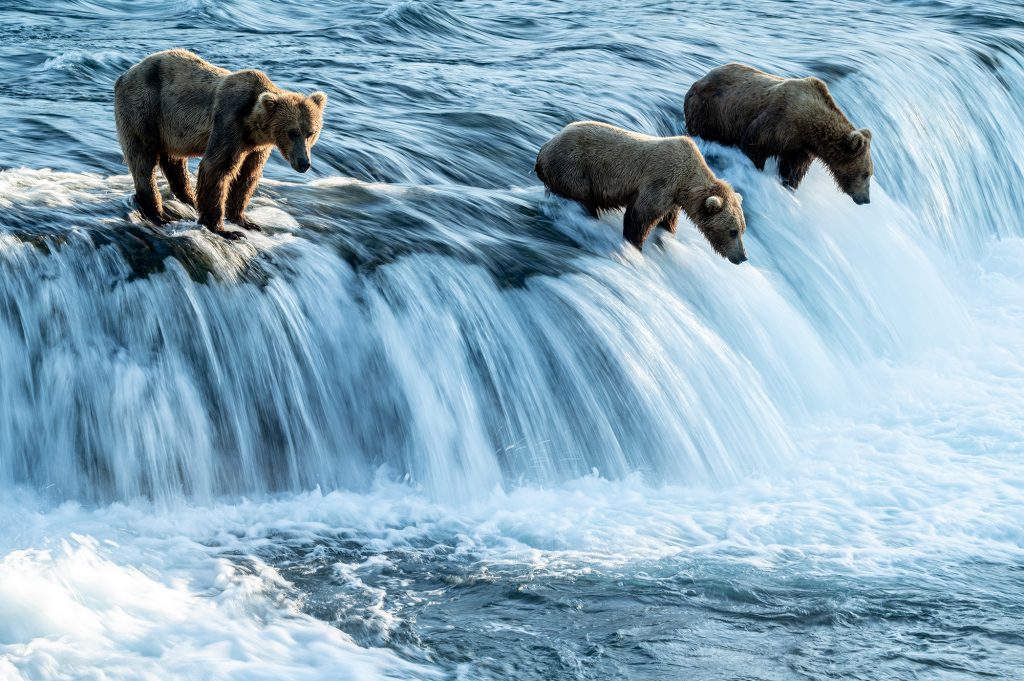
Located downstream, this platform offers a wider perspective of the river, allowing for shots of bears wandering through the water or socializing. It is often less crowded than the main falls.
Lower River Platform
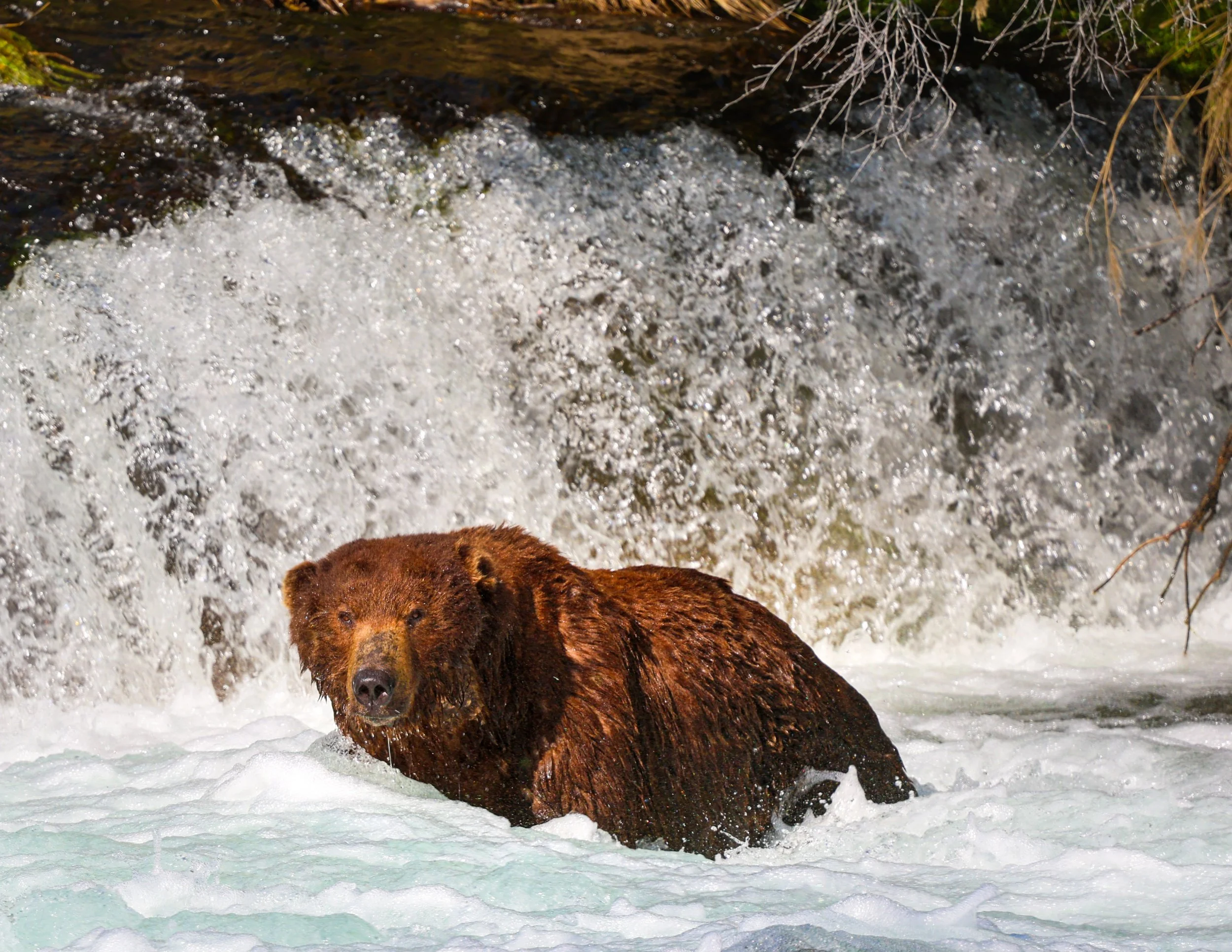
Situated closer to the mouth of the river, this area is ideal for capturing bears against the backdrop of the surrounding landscape. Use this location for environmental portraits and wider shots.
Best Time for Brooks Falls Bear Photography
The prime window for bear photography at Brooks Falls occurs in July and September, when salmon runs draw the highest concentration of bears. To secure optimal lighting and fewer crowds, align your visit with the recommended arrival window of 17:00–22:00.
Early July
Peak crowdsCool, 45-60°F; wet conditions common
Bears congregate at the falls to feed on sockeye salmon. High bear activity levels occur during this peak period.
Late August to September
Moderate crowdsCooler, 35-55°F; chance of frost
Bears return to the falls for the late salmon run. This period offers diverse photographic opportunities as bears prepare for winter.
Daily 17:00–22:00
Low crowds—
This window allows photographers to capture images after day visitors depart. Light quality often improves during these evening hours.
Verdict: The best opportunity for photography is during the September salmon run, specifically arriving during the 17:00–22:00 window to minimize crowd interference.
Rules for Ethical Brooks Falls Bear Photography
At Brooks Camp, photography etiquette is enforced policy: rangers manage platform access, and a poorly placed tripod or a step toward a bear can close a viewing area for everyone. The rules exist because bears here have right of way at all times.
Do
- Complete the mandatory bear etiquette orientation before accessing any platform
- Keep 50 yards from bears, 100 yards from mating or feeding bears
- Yield your spot when rangers rotate the platform queue
- Store all food and scented items in designated caches
- Speak quietly and announce yourself calmly when moving on boardwalks
- Carry gear in on straps, keeping walkways and railings clear
Don't
- Never use flash, drones, or artificial calls to attract bears
- Do not leave camera bags, tripods, or lenses unattended
- Never block railings with long lenses during busy platform rotations
- Do not step off boardwalks or approach bears for a closer frame
- Never run from a bear or crowd one to reposition
- Do not bring food, snacks, or drinks onto viewing platforms
Brooks Falls Bear Photography Access Hours
The bear viewing areas at Brooks Falls are accessible daily during the operational hours listed below.
| Monday | 07:00–22:00 | |
|---|---|---|
| Tuesday | 07:00–22:00 | |
| Wednesday | 07:00–22:00 | |
| Thursday | 07:00–22:00 | |
| Friday | 07:00–22:00 | |
| Saturday | 07:00–22:00 | |
| Sunday | 07:00–22:00 |
Entrance Fees for Brooks Falls Bear Photography
Access to the Brooks Falls bear viewing area within Katmai National Park and Preserve is free of charge. Visitors should note that while park entry has no fee, independent costs for air taxi transportation and lodging must be managed separately.
A typical adult pays 0 USD for park entry, with total trip costs depending entirely on external flight and lodging arrangements.
How to Reach Brooks Falls for Bear Photography
Brooks Camp is located in Katmai National Park and Preserve, Alaska, accessible only by air and water. Travelers typically arrive via commercial flight to King Salmon before connecting to a floatplane service to reach the Brooks Camp site.
Commercial flight to King Salmon Airport
Air taxi service from King Salmon to Brooks Camp
From Brooks Camp beach to Brooks Falls platforms
Check availability
Frequently Asked Questions About Brooks Falls Bear Photography
Everything you need to know about brooks falls bear photography